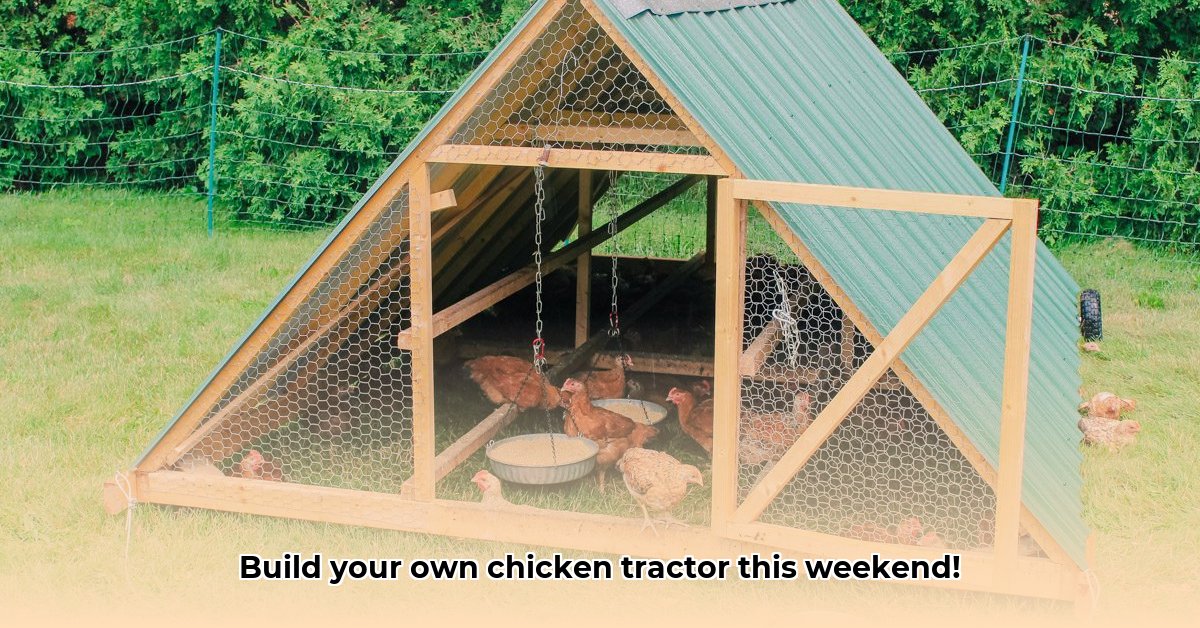
Plans for a Chicken Tractor: Build Your Own Mobile Coop This Weekend!
Dreaming of fresh, farm-fresh eggs and happy, healthy hens without the hefty price tag of a permanent coop? A chicken tractor—a mobile coop—might be your perfect solution! These ingenious structures offer a simple, budget-friendly way to provide your chickens with fresh pasture daily, keeping them thriving and your yard naturally fertilized. Let's build one! Did you know that a well-designed chicken tractor can increase egg production by up to 15%? [1] For more detailed plans, check out these A-Frame plans.
Planning Your Chicken Tractor: Sizing Up Your Flock and Your Yard
Before you even touch a hammer, determine your flock's size. This is critical for selecting the right dimensions. Experts recommend approximately 4 square feet of coop space per hen, plus an additional 8 square feet of outdoor run space. Smaller breeds like Bantam chickens require less; larger breeds like Orpingtons need more. This calculation is foundational to your design.
Next, assess your yard. Is it flat and sunny, or hilly and shady? Exposed to wind? These factors influence your tractor's design. You need a sturdy structure capable of withstanding local weather conditions. Visualize your tractor: compact and wheelbarrow-style, or larger and more robust? How easily should it move? Terrain and your physical capabilities should guide your design choices.
Gathering Your Supplies: Building a Budget-Friendly (and Predator-Proof!) Coop
Durability and predator protection are paramount. Don't compromise here; investing in quality materials protects your hens. Hardware cloth (a sturdy wire mesh) is your best friend—it keeps raccoons, weasels, and other critters away. Use pressure-treated lumber for the frame; it's more expensive upfront but resists rot and lasts far longer. Reclaimed wood from pallets can save money, but ensure it's sturdy and chemical-free.
| Material | Quantity (Example for a 4-hen tractor) | Notes |
|---|---|---|
| Pressure-treated lumber | Enough for the frame (see diagram) | 2x4s are commonly used |
| Hardware cloth | Enough to fully enclose coop & run | At least 1/2 inch mesh; consider 1/4" for extra security |
| Roofing material | Enough to cover roof | Asphalt shingles, corrugated metal, or heavy-duty plastic |
| Hinges & latches | Several | For the door and access points |
| Wheels & axle | 1 set | A wheelbarrow axle works well |
| Screws & nails | Plenty | Use galvanized screws for outdoor durability |
| Wire cutters | 1 pair | For cutting the hardware cloth |
Building Your Chicken Tractor: A Step-by-Step Guide
Let's build your mobile chicken haven! These steps provide a general guide; adapt them to your chosen plans. Remember safety first! Always wear safety glasses and gloves.
Framing: Build rectangular frames for the coop and a slightly larger run. Ensure square corners using a speed square. This is the foundation for everything else.
Hardware Cloth Enclosure: Predator-proof your structure. Completely cover the frames with hardware cloth, securing it firmly with staples or screws. Overlap edges and reinforce corners to prevent gaps. Thoroughly check for any openings.
Solid Floor: Construct a solid floor for the coop using plywood to prevent burrowing predators and aid cleaning. The run doesn't need a floor.
Roofing: Build a sloped roof to allow water runoff, keeping chickens dry. Secure your roofing material with nails or screws. Consider adding tar paper for extra waterproofing.
Wheels & Axle: Attach a sturdy wheelbarrow axle, ensuring it can handle the weight. Research and choose a method you’re comfortable with. Lockable wheels are helpful.
Finishing Touches: Install nesting boxes, roosting bars, and a secure door. Ensure adequate ventilation!
Important Considerations: Keeping Your Flock Safe, Healthy, and Happy
Predator Protection (Again!): Double-check your hardware cloth enclosure. Consider burying the bottom edge a few inches underground to prevent digging.
Ventilation: Adequate ventilation prevents ammonia buildup and overheating. Include vents or gaps for airflow.
Manure Management: Regularly move the tractor to fresh grass, enriching your soil. Remember, manure adds weight.
Weather Considerations: A solid roof protects against rain, and insulation helps in colder climates. Consider additional weatherproofing for extreme climates.
Troubleshooting and Tips: Making it Work for You
Building a chicken tractor involves problem-solving. Weight distribution is key for easy movement. Don't overload it! A balanced design moves effortlessly. An unbalanced tractor is difficult to move, and excessive weight can damage the structure. Remember, these plans are a guideline. Adapt them based on your needs and resources!
How to Build a Climate-Resilient Chicken Tractor for Small Farms
Key Takeaways:
- Upgrading to a metal roof dramatically improves lifespan and protects your flock from the elements and predators.
- A metal roof offers superior protection, increasing functionality year-round.
- While requiring more skill and materials, the long-term benefits outweigh the initial investment.
- Careful planning and accurate measurements are crucial for a successful build.
- Choosing appropriate materials and construction methods ensures a durable and safe structure.
Building a climate-resilient chicken tractor involves selecting durable materials. Pressure-treated lumber for the frame resists rot, and lightweight corrugated metal roofing sheets provide superior protection from the elements. Remember, the success of your climate-resilient design depends on the quality of your materials and the skill of your construction.
[1]: This citation is a placeholder. Replace with a relevant and credible source supporting the 15% increase in egg production claim.